Monday, December 28, 2015

Sunday, December 27, 2015
Drug resistance deadlier than cancer by 2050: Study
Infections resistant to medicines will kill more people per year than cancer by 2050, and cost the world $100 trillion annually, according to a U.K. government-backed report led by Jim O'Neill, the well-known former Goldman Sachs economist.
http://www.cnbc.com/2014/12/11/drug-resistance-to-kill-more-than-cancer-by-2050-study.html?__source=facebook%7Chealthcare%7Clink%7C122615%7C10PM%7Cdeadlier-than-cancer
http://www.cnbc.com/2014/12/11/drug-resistance-to-kill-more-than-cancer-by-2050-study.html?__source=facebook%7Chealthcare%7Clink%7C122615%7C10PM%7Cdeadlier-than-cancer
Monday, December 21, 2015
Ahead of Print -Nanopore Sequencing as a Rapidly Deployable Ebola Outbreak Tool - Volume 22, Number 2—February 2016 - Emerging Infectious Disease journal - CDC
Rapid sequencing of RNA/DNA from pathogen samples obtained during disease outbreaks provides critical scientific and public health information. However, challenges exist for exporting samples to laboratories or establishing conventional sequencers in remote outbreak regions. We successfully used a novel, pocket-sized nanopore sequencer at a field diagnostic laboratory in Liberia during the current Ebola virus outbreak.
Ahead of Print -Nanopore Sequencing as a Rapidly Deployable Ebola Outbreak Tool - Volume 22, Number 2—February 2016 - Emerging Infectious Disease journal - CDC
Ahead of Print -Nanopore Sequencing as a Rapidly Deployable Ebola Outbreak Tool - Volume 22, Number 2—February 2016 - Emerging Infectious Disease journal - CDC
Ahead of Print -Hospital Preparations for Viral Hemorrhagic Fever Patients and Experience Gained from Admission of an Ebola Patient - Volume 22, Number 2—February 2016 - Emerging Infectious Disease journal - CDC
The Major Incident Hospital of the University Medical Centre of Utrecht has a longstanding history of preparing for the management of highly pathogenic and infectious organisms. An assessment of the hospital’s preparations for an outbreak of viral hemorrhagic fever and its experience during admission of a patient with Ebola virus disease showed that the use of the buddy system, frequent training, and information sessions for staff and their relatives greatly increased the sense of safety and motivation among staff. Differing procedures among ambulance services limited the number of services used for transporting patients. Waste management was the greatest concern, and destruction of waste had to be outsourced. The admission of an Ebola patient proceeded without incident but led to considerable demands on staff. The maximum time allowed for wearing personal protective equipment was 45 minutes to ensure safety, and an additional 20 minutes was needed for recovery.
Ahead of Print -Hospital Preparations for Viral Hemorrhagic Fever Patients and Experience Gained from Admission of an Ebola Patient - Volume 22, Number 2—February 2016 - Emerging Infectious Disease journal - CDC
Ahead of Print -Hospital Preparations for Viral Hemorrhagic Fever Patients and Experience Gained from Admission of an Ebola Patient - Volume 22, Number 2—February 2016 - Emerging Infectious Disease journal - CDC
Friday, December 18, 2015
Ahead of Print -Association between Landscape Factors and Spatial Patterns of Plasmodium knowlesi Infections in Sabah, Malaysia - Volume 22, Number 2—February 2016 - Emerging Infectious Disease journal - CDC
The zoonotic malaria species Plasmodium knowlesi has become the main cause of human malaria in Malaysian Borneo. Deforestation and associated environmental and population changes have been hypothesized as main drivers of this apparent emergence. We gathered village-level data for P. knowlesiincidence for the districts of Kudat and Kota Marudu in Sabah state, Malaysia, for 2008–2012. We adjusted malaria records from routine reporting systems to reflect the diagnostic uncertainty of microscopy for P. knowlesi. We also developed negative binomial spatial autoregressive models to assess potential associations between P. knowlesi incidence and environmental variables derived from satellite-based remote-sensing data. Marked spatial heterogeneity in P. knowlesi incidence was observed, and village-level numbers of P. knowlesi cases were positively associated with forest cover and historical forest loss in surrounding areas. These results suggest the likelihood that deforestation and associated environmental changes are key drivers in P. knowlesi transmission in these areas.
Ahead of Print -Association between Landscape Factors and Spatial Patterns of Plasmodium knowlesi Infections in Sabah, Malaysia - Volume 22, Number 2—February 2016 - Emerging Infectious Disease journal - CDC
Ahead of Print -Association between Landscape Factors and Spatial Patterns of Plasmodium knowlesi Infections in Sabah, Malaysia - Volume 22, Number 2—February 2016 - Emerging Infectious Disease journal - CDC
Wednesday, December 16, 2015
Ahead of Print -Prognostic Indicators for Ebola Patient Survival - Volume 22, Number 2—February 2016 - Emerging Infectious Disease journal - CDC
To determine whether 2 readily available indicators predicted survival among patients with Ebola virus disease in Sierra Leone, we evaluated information for 216 of the 227 patients in Bo District during a 4-month period. The indicators were time from symptom onset to healthcare facility admission and quantitative real-time reverse transcription PCR cycle threshold (Ct), a surrogate for viral load, in first Ebola virus–positive blood sample tested. Of these patients, 151 were alive when detected and had reported healthcare facility admission dates and Ct values available. Time from symptom onset to healthcare facility admission was not associated with survival, but viral load in the first Ebola virus–positive blood sample was inversely associated with survival: 52 (87%) of 60 patients with a Ct of >24 survived and 20 (22%) of 91 with a Ct of <24 survived. Ct values may be useful for clinicians making treatment decisions or managing patient or family expectations.
Ahead of Print -Prognostic Indicators for Ebola Patient Survival - Volume 22, Number 2—February 2016 - Emerging Infectious Disease journal - CDC
Ahead of Print -Prognostic Indicators for Ebola Patient Survival - Volume 22, Number 2—February 2016 - Emerging Infectious Disease journal - CDC
Ahead of Print -Identification of Source of Brucella suis Infection in Human by Whole-Genome Sequencing, United States and Tonga - Volume 22, Number 1—January 2016 - Emerging Infectious Disease journal - CDC
Brucella suis infection was diagnosed in a man from Tonga, Polynesia, who had butchered swine in Oregon, USA. Although the US commercial swine herd is designated brucellosis-free, exposure history suggested infection from commercial pigs. We used whole-genome sequencing to determine that the man was infected in Tonga, averting a field investigation.
Ahead of Print -Identification of Source of Brucella suis Infection in Human by Whole-Genome Sequencing, United States and Tonga - Volume 22, Number 1—January 2016 - Emerging Infectious Disease journal - CDC
Ahead of Print -Identification of Source of Brucella suis Infection in Human by Whole-Genome Sequencing, United States and Tonga - Volume 22, Number 1—January 2016 - Emerging Infectious Disease journal - CDC
Ahead of Print -Multiorgan WU Polyomavirus Infection in Bone Marrow Transplant Recipient - Volume 22, Number 1—January 2016 - Emerging Infectious Disease journal - CDC
WU polyomavirus (WUPyV) was detected in a bone marrow transplant recipient with severe acute respiratory distress syndrome who died in 2001. Crystalline lattices of polyomavirus-like particles were observed in the patient’s lung by electron microscopy. WUPyV was detected in the lung and other tissues by real-time quantitative PCR and identified in the lung and trachea by immunohistochemistry. A subset of WUPyV-positive cells in the lung had morphologic features of macrophages. Although the role of WUPyV as a human pathogen remains unclear, these results clearly demonstrate evidence for infection of respiratory tract tissues in this patient.
Ahead of Print -Multiorgan WU Polyomavirus Infection in Bone Marrow Transplant Recipient - Volume 22, Number 1—January 2016 - Emerging Infectious Disease journal - CDC
Ahead of Print -Multiorgan WU Polyomavirus Infection in Bone Marrow Transplant Recipient - Volume 22, Number 1—January 2016 - Emerging Infectious Disease journal - CDC
Monday, December 14, 2015
Meningococcal disease survivor shares life-saving message | Fox News
Jamie Schanbaum was a 20-year-old student at the University of Texas when she fell sick with pain all over her body. She wasn’t able to walk, and couldn’t retain any heat.
Meningococcal disease survivor shares life-saving message | Fox News
Meningococcal disease survivor shares life-saving message | Fox News
Tuesday, December 8, 2015
Ahead of Print -The Merits of Malaria Diagnostics during an Ebola Virus Disease Outbreak - Volume 22, Number 2—February 2016 - Emerging Infectious Disease journal - CDC
Malaria is a major public health concern in the countries affected by the Ebola virus disease epidemic in West Africa. We determined the feasibility of using molecular malaria diagnostics during an Ebola virus disease outbreak and report the incidence of Plasmodium spp. parasitemia in persons with suspected Ebola virus infection.
Ahead of Print -The Merits of Malaria Diagnostics during an Ebola Virus Disease Outbreak - Volume 22, Number 2—February 2016 - Emerging Infectious Disease journal - CDC
Ahead of Print -The Merits of Malaria Diagnostics during an Ebola Virus Disease Outbreak - Volume 22, Number 2—February 2016 - Emerging Infectious Disease journal - CDC
Wednesday, December 2, 2015
Ahead of Print -Surveillance of Bacterial Meningitis, Ethiopia, 2012–2013 - Volume 22, Number 1—January 2016 - Emerging Infectious Disease journal - CDC
Among 139 patients with suspected bacterial meningitis in Ethiopia, 2012–2013, meningococci (19.4%) and pneumococci (12.9%) were the major disease-causing organisms. Meningococcal serogroups detected were A (n = 11), W (n = 7), C (n = 1), and X (n = 1). Affordable, multivalent meningitis vaccines for the African meningitis belt are urgently needed.
Ahead of Print -Surveillance of Bacterial Meningitis, Ethiopia, 2012–2013 - Volume 22, Number 1—January 2016 - Emerging Infectious Disease journal - CDC
Ahead of Print -Surveillance of Bacterial Meningitis, Ethiopia, 2012–2013 - Volume 22, Number 1—January 2016 - Emerging Infectious Disease journal - CDC
Ahead of Print -Rift Valley Fever Virus among Wild Ruminants, Etosha National Park, Namibia, 2011 - Volume 22, Number 1—January 2016 - Emerging Infectious Disease journal - CDC
After a May 2011 outbreak of Rift Valley fever among livestock northeast of Etosha National Park, Namibia, wild ruminants in the park were tested for the virus. Antibodies were detected in springbok, wildebeest, and black-faced impala, and viral RNA was detected in springbok. Seroprevalence was high, and immune response was long lasting.
Ahead of Print -Rift Valley Fever Virus among Wild Ruminants, Etosha National Park, Namibia, 2011 - Volume 22, Number 1—January 2016 - Emerging Infectious Disease journal - CDC
Ahead of Print -Rift Valley Fever Virus among Wild Ruminants, Etosha National Park, Namibia, 2011 - Volume 22, Number 1—January 2016 - Emerging Infectious Disease journal - CDC
CDC says disease rates on the rise | fox4kc.com
In the past year, the rates of people with sexually transmitted diseases in the U.S. have increased dramatically, according to the most recent 2014 report from the Centers for Disease Control and Prevention (CDC). Despite having been on the decline for years, the number of cases of chlamydia and gonorrhea rose from 2013 to 2014, and cases of syphilis rose by 15.1% year over year.
Though these increases are troubling, they aren’t the only disease rates that have seen growth in the last couple of years. Using data from the CDC, HealthGrove identified 14 diseases that have risen in the U.S. in the past decade.
CDC says disease rates on the rise | fox4kc.com
Friday, November 27, 2015
California farm recalls produce used in Costco salad linked to E. coli | Fox News
SAN FRANCISCO – A California farm is recalling a vegetable mix believed to be the source of E.coli in Costco chicken salad that has been linked to an outbreak that has sickened 19 people in seven states, the Food and Drug Administration said Thursday.
Taylor Farms Pacific Inc. of Tracy, California, has recalled a mix of diced celery and onion used in Costco chicken salad and other foods containing celery "out of an abundance of caution," the FDA said in a statement.
California farm recalls produce used in Costco salad linked to E. coli | Fox News
México confirma dos casos de personas con el virus zica - Univision
Esta semana el gobierno de Nicaragua declaró que “el virus zika ya esta en Centroamérica”. Este mismo jueves, la Secretaría de Salud de México confirmó dos casos de personas infectadas con este virus transmitido por el mosquito Aedes Aegypti, el mismo del dengue y la chikunguya.
México confirma dos casos de personas con el virus zica - Univision
México confirma dos casos de personas con el virus zica - Univision
Tuesday, November 24, 2015
Costco chicken salad named in widespread E. coli outbreak - KCTV5
(RNN) - Costco chicken salad is the culprit in a multistate E. coli outbreak, the Centers for Disease Control and Prevention announced Tuesday.
Read more: http://www.kctv5.com/story/30598084/costco-chicken-salad-named-in-widespread-e-coli-outbreak#ixzz3sRzC9pE6
Costco chicken salad named in widespread E. coli outbreak - KCTV5
Read more: http://www.kctv5.com/story/30598084/costco-chicken-salad-named-in-widespread-e-coli-outbreak#ixzz3sRzC9pE6
Costco chicken salad named in widespread E. coli outbreak - KCTV5
Friday, November 20, 2015
Ahead of Print -Uveitis and Systemic Inflammatory Markers in Convalescent Phase of Ebola Virus Disease - Volume 22, Number 2—February 2016 - Emerging Infectious Disease journal - CDC
We report a case of probable Zaire Ebola virus–related ophthalmologic complications in a physician from the United States who contracted Ebola virus disease in Liberia. Uveitis, immune activation, and nonspecific increase in antibody titers developed during convalescence. This case highlights immune phenomena that could complicate management of Ebola virus disease–related uveitis during convalescence.
Ahead of Print -Uveitis and Systemic Inflammatory Markers in Convalescent Phase of Ebola Virus Disease - Volume 22, Number 2—February 2016 - Emerging Infectious Disease journal - CDC
Ahead of Print -Uveitis and Systemic Inflammatory Markers in Convalescent Phase of Ebola Virus Disease - Volume 22, Number 2—February 2016 - Emerging Infectious Disease journal - CDC
Thursday, November 19, 2015
Ahead of Print -Epidemiology of Epidemic Ebola Virus Disease in Conakry and Surrounding Prefectures, Guinea, 2014–2015 - Volume 22, Number 2—February 2016 - Emerging Infectious Disease journal - CDC
In 2014, Ebola virus disease (EVD) in West Africa was first reported during March in 3 southeastern prefectures in Guinea; from there, the disease rapidly spread across West Africa. We describe the epidemiology of EVD cases reported in Guinea’s capital, Conakry, and 4 surrounding prefectures (Coyah, Dubreka, Forecariah, and Kindia), encompassing a full year of the epidemic. A total of 1,355 EVD cases, representing ≈40% of cases reported in Guinea, originated from these areas. Overall, Forecariah had the highest cumulative incidence (4× higher than that in Conakry). Case-fatality percentage ranged from 40% in Conakry to 60% in Kindia. Cumulative incidence was slightly higher among male than female residents, although incidences by prefecture and commune differed by sex. Over the course of the year, Conakry and neighboring prefectures became the EVD epicenter in Guinea. Transmission continues to linger in these areas, the last holdout of the epidemic, necessitating continued public health vigilance.
Ahead of Print -Epidemiology of Epidemic Ebola Virus Disease in Conakry and Surrounding Prefectures, Guinea, 2014–2015 - Volume 22, Number 2—February 2016 - Emerging Infectious Disease journal - CDC
Ahead of Print -Epidemiology of Epidemic Ebola Virus Disease in Conakry and Surrounding Prefectures, Guinea, 2014–2015 - Volume 22, Number 2—February 2016 - Emerging Infectious Disease journal - CDC
Ahead of Print -Ebola Virus Persistence in Semen Ex Vivo - Volume 22, Number 2—February 2016 - Emerging Infectious Disease journal - CDC
On March 20, 2015, a case of Ebola virus disease was identified in Liberia that most likely was transmitted through sexual contact. We assessed the efficiency of detecting Ebola virus in semen samples by molecular diagnostics and the stability of Ebola virus in ex vivo semen under simulated tropical conditions.
Ahead of Print -Ebola Virus Persistence in Semen Ex Vivo - Volume 22, Number 2—February 2016 - Emerging Infectious Disease journal - CDC
Ahead of Print -Ebola Virus Persistence in Semen Ex Vivo - Volume 22, Number 2—February 2016 - Emerging Infectious Disease journal - CDC
Monday, November 16, 2015
USDA Embraces One Health Approach for Solving Problems Associated with Antimicrobial Resistance
From the #USDA:
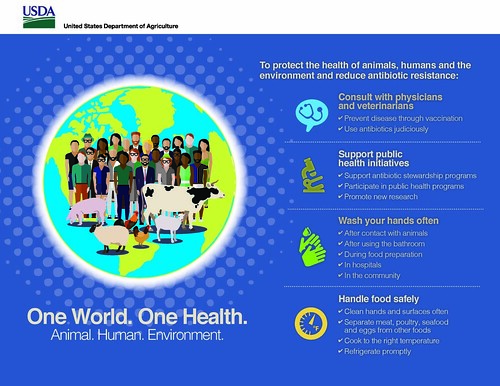
One World. One Health. Animal. Human. Environment infographic. USDA photo (Click to enlarge)
This week is World Antibiotic Awareness Week and USDA remains focused on prolonging the usefulness of a very precious resource—antibiotics. These medicines successfully treat and prevent infectious diseases and must be used responsibly to remain effective to all who need them. USDA also recognizes that antimicrobial resistance, or the ability of bacteria and other microbes to survive the effects of an antibiotic and then proliferate, is a serious threat to both animal health and human health.
Earlier this year, the World Health Assembly developed a global action plan to combat antimicrobial resistance (AMR). The five objectives of the plan are: Increasing awareness, strengthening research and surveillance, reducing infections, optimizing antimicrobial use, and ensuring sustainable investments to contain AMR.
At USDA, we use a One Health approach that embraces the idea that a problem such as AMR arising at the intersection of the health of humans, animals, and the environment can be solved only through a coordinated multidisciplinary approach.
Within USDA, there are eight agencies engaged in addressing some aspect of AMR: the Agricultural Research Service, the Agricultural Marketing Service, the Animal and Plant Health Inspection Service, the Economic Research Service, the Food Safety and Inspection Service, the Foreign Agricultural Service, the National Agricultural Statistics Service, and the National Institutes for Food and Agriculture. Our One Health Joint Working Group within USDA coordinates the work of these agencies for a comprehensive approach to address multiple facets of the issue.
Last year, USDA developed an AMR Action Plan based on broad stakeholder and federal partner feedback. The USDA AMR Action Plan outlines USDA’s current activities across USDA agencies and proposes a comprehensive, integrated approach for future activities that includes monitoring and surveillance; research and development; and education and outreach. Data collection through monitoring and surveillance provides the fuel for targetingresearch into epidemiology, ecology, and preventive health approaches allowing for development of critical mitigation strategies. Education and outreach are necessary to spread the word and enhance implementation of findings.
USDA’s AMR Action Plan provides the details of USDA’s responsibilities outlined in the Combating Antibiotic Resistant Bacteria (CARB) National Action Plan, developed with our federal partners. In both of these plans, we take advantage of the strengths of our existing activities and collective experience in animal agriculture and describe additional work necessary to fill knowledge gaps.
Our understanding of the factors that contribute to development of infectious disease, which includes those that are resistant to antibiotics in various settings, is incomplete. Agricultural systems are diverse and complex even within a specific commodity group. To identify and apply effective mitigation strategies, it is critical for many disciplines to work together to improve our understanding of where pathogens originate, how they interact in the environment, and how we can effectively diminish their occurrence. A “One-Health” approach is needed to prevent, not just react to, complex public and animal health issues. We also recognize that for prevention to be effective, we need to invest resources in a variety of strategies. Risk management requires collaboration among human, animal, and environmental sectors.
The theme of the World Antibiotic Awareness Week campaign this year is, Antibiotics: Handle with Care. You can find what some of our stakeholders are doing to preserve this valuable resource through a Fact Sheet distributed during the White House Forum on Antibiotic Stewardship held June 2, 2015.
Sunday, November 15, 2015
Thursday, November 12, 2015
Ahead of Print -Identifying and Reducing Remaining Stocks of Rinderpest Virus - Volume 21, Number 12—December 2015 - Emerging Infectious Disease journal - CDC
In 2011, the world was declared free from rinderpest, one of the most feared and devastating infectious diseases of animals. Rinderpest is the second infectious disease, after smallpox, to have been eradicated. However, potentially infectious rinderpest virus material remains widely disseminated among research and diagnostic facilities across the world and poses a risk for disease recurrence should it be released. Member Countries of the World Organisation for Animal Health and the Food and Agricultural Organization of the United Nations are committed to destroying remaining stocks of infectious material or ensuring that it is stored under international supervision in a limited number of approved facilities. To facilitate this commitment and maintain global freedom from rinderpest, World Organisation for Animal Health Member Countries must report annually on rinderpest material held in their countries. The first official surveys, conducted during 2013–2015, revealed that rinderpest material was stored in an unacceptably high number of facilities and countries.
Ahead of Print -Identifying and Reducing Remaining Stocks of Rinderpest Virus - Volume 21, Number 12—December 2015 - Emerging Infectious Disease journal - CDC
Ahead of Print -Identifying and Reducing Remaining Stocks of Rinderpest Virus - Volume 21, Number 12—December 2015 - Emerging Infectious Disease journal - CDC
Monday, November 9, 2015
Ahead of Print -Louseborne Relapsing Fever among East African Refugees, Italy, 2015 - Volume 22, Number 2—February 2016 - Emerging Infectious Disease journal - CDC
During June 9–September 30, 2015, five cases of louseborne relapsing fever were identified in Turin, Italy. All 5 cases were in young refugees from Somalia, 2 of whom had lived in Italy since 2011. Our report seems to confirm the possibility of local transmission of louse-borne relapsing fever.
Ahead of Print -Louseborne Relapsing Fever among East African Refugees, Italy, 2015 - Volume 22, Number 2—February 2016 - Emerging Infectious Disease journal - CDC
Ahead of Print -Louseborne Relapsing Fever among East African Refugees, Italy, 2015 - Volume 22, Number 2—February 2016 - Emerging Infectious Disease journal - CDC
Tuesday, November 3, 2015
Ahead of Print -Effectiveness of Ring Vaccination as Control Strategy for Ebola Virus Disease - Volume 22, Number 1—January 2016 - Emerging Infectious Disease journal - CDC
Using an Ebola virus disease transmission model, we found that addition of ring vaccination at the outset of the West Africa epidemic might not have led to containment of this disease. However, in later stages of the epidemic or outbreaks with less intense transmission or more effective control, this strategy could help eliminate the disease.
Ahead of Print -Effectiveness of Ring Vaccination as Control Strategy for Ebola Virus Disease - Volume 22, Number 1—January 2016 - Emerging Infectious Disease journal - CDC
Ahead of Print -Effectiveness of Ring Vaccination as Control Strategy for Ebola Virus Disease - Volume 22, Number 1—January 2016 - Emerging Infectious Disease journal - CDC
Thursday, October 29, 2015
Wednesday, October 28, 2015
Ahead of Print -Methicillin-Resistant Staphylococcus aureus Prevalence among Captive Chimpanzees, Texas, USA, 20121 - Volume 21, Number 12—December 2015 - Emerging Infectious Disease journal - CDC
Methicillin-resistant Staphylococcus aureus (MRSA) infection in humans and animals is concerning. In 2012, our evaluation of a captive chimpanzee colony in Texas revealed MRSA prevalence of 69%. Animal care staff should be aware of possible zoonotic MRSA transmission resulting from high prevalence among captive chimpanzees.
Ahead of Print -Methicillin-Resistant Staphylococcus aureus Prevalence among Captive Chimpanzees, Texas, USA, 20121 - Volume 21, Number 12—December 2015 - Emerging Infectious Disease journal - CDC
Ahead of Print -Methicillin-Resistant Staphylococcus aureus Prevalence among Captive Chimpanzees, Texas, USA, 20121 - Volume 21, Number 12—December 2015 - Emerging Infectious Disease journal - CDC
Ahead of Print -Vectorborne Transmission of Leishmania infantum from Hounds, United States - Volume 21, Number 12—December 2015 - Emerging Infectious Disease journal - CDC
Leishmaniasis is a zoonotic disease caused by predominantly vectorborne Leishmania spp. In the United States, canine visceral leishmaniasis is common among hounds, and L. infantum vertical transmission among hounds has been confirmed. We found that L. infantum from hounds remains infective in sandflies, underscoring the risk for human exposure by vectorborne transmission.
Ahead of Print -Vectorborne Transmission of Leishmania infantum from Hounds, United States - Volume 21, Number 12—December 2015 - Emerging Infectious Disease journal - CDC
Ahead of Print -Vectorborne Transmission of Leishmania infantum from Hounds, United States - Volume 21, Number 12—December 2015 - Emerging Infectious Disease journal - CDC
Ahead of Print -No Evidence of Gouléako and Herbert Virus Infections in Pigs, Côte d’Ivoire and Ghana - Volume 21, Number 12—December 2015 - Emerging Infectious Disease journal - CDC
A recent report suggested that 2 novel bunyaviruses discovered in insects in Côte d’Ivoire caused lethal disease in swine in South Korea. We conducted cell culture studies and tested serum from pigs exposed to mosquitoes in Côte d’Ivoire and Ghana and found no evidence for infection in pigs.
Ahead of Print -No Evidence of Gouléako and Herbert Virus Infections in Pigs, Côte d’Ivoire and Ghana - Volume 21, Number 12—December 2015 - Emerging Infectious Disease journal - CDC
Ahead of Print -No Evidence of Gouléako and Herbert Virus Infections in Pigs, Côte d’Ivoire and Ghana - Volume 21, Number 12—December 2015 - Emerging Infectious Disease journal - CDC
Ahead of Print -Biological Warfare Plan in the 17th Century: the Siege of Candia, 1648–1669 - Volume 21, Number 12—December 2015 - Emerging Infectious Disease journal - CDC
A little-known effort to conduct biological warfare occurred during the 17th century. The incident transpired during the Venetian–Ottoman War, when the city of Candia (now Heraklion, Greece) was under siege by the Ottomans (1648–1669). The data we describe, obtained from the Archives of the Venetian State, are related to an operation organized by the Venetian Intelligence Services, which aimed at lifting the siege by infecting the Ottoman soldiers with plague by attacking them with a liquid made from the spleens and buboes of plague victims. Although the plan was perfectly organized, and the deadly mixture was ready to use, the attack was ultimately never carried out. The conception and the detailed cynical planning of the attack on Candia illustrate a dangerous way of thinking about the use of biological weapons and the absence of reservations when potential users, within their religious framework, cast their enemies as undeserving of humanitarian consideration.
Ahead of Print -Biological Warfare Plan in the 17th Century: the Siege of Candia, 1648–1669 - Volume 21, Number 12—December 2015 - Emerging Infectious Disease journal - CDC
Ahead of Print -Biological Warfare Plan in the 17th Century: the Siege of Candia, 1648–1669 - Volume 21, Number 12—December 2015 - Emerging Infectious Disease journal - CDC
Tuesday, October 27, 2015
Monday, October 19, 2015
Friday, October 16, 2015
Ahead of Print -Preliminary Favorable Outcome for Medically and Surgically Managed Extensively Drug-Resistant Tuberculosis, France, 2009–2014 - Volume 22, Number 3—March 2016 - Emerging Infectious Disease journal - CDC
We report 20 cases of extensively drug-resistant tuberculosis managed in France. Treatment was individualized and included bedaquiline and linezolid for most patients and surgery in 8 patients. At last follow-up (22 months), 19 patients had achieved conversion from positive to negative on culture testing. These promising results of comprehensive management obtained in a small series deserve confirmation.
Ahead of Print -Preliminary Favorable Outcome for Medically and Surgically Managed Extensively Drug-Resistant Tuberculosis, France, 2009–2014 - Volume 22, Number 3—March 2016 - Emerging Infectious Disease journal - CDC
Ahead of Print -Preliminary Favorable Outcome for Medically and Surgically Managed Extensively Drug-Resistant Tuberculosis, France, 2009–2014 - Volume 22, Number 3—March 2016 - Emerging Infectious Disease journal - CDC
Thursday, October 15, 2015
Enfermera con ébola puede ser un caso de recaída - Univision
Oh, crap!
En casos inusuales es posible que pacientes que sobrevivieron al ébola desarrollen una vez más la enfermedad cuando el persistente virus en el cuerpo comienza a reproducirse, informó la Organización Mundial de la Salud.
Enfermera con ébola puede ser un caso de recaída - Univision
#Ebola
En casos inusuales es posible que pacientes que sobrevivieron al ébola desarrollen una vez más la enfermedad cuando el persistente virus en el cuerpo comienza a reproducirse, informó la Organización Mundial de la Salud.
Enfermera con ébola puede ser un caso de recaída - Univision
#Ebola
Tuesday, October 6, 2015
KCMO School District on alert after 60 students come down with symptoms of illness | fox4kc.com
KANSAS CITY, Mo. -- An infectious bacterial disease is on the rise in Kansas City. The Kansas City Missouri Health Department says it investigates 10 cases of Shigella every year, but this year epidemiologists have seen 190 cases.
KCMO School District on alert after 60 students come down with symptoms of illness | fox4kc.com
KCMO School District on alert after 60 students come down with symptoms of illness | fox4kc.com
Saturday, October 3, 2015
Ahead of Print -No Geographic Correlation between Lyme Disease and Death due to 4 Neurodegenerative Disorders, United States, 2001–2010 - Volume 21, Number 11—November 2015 - Emerging Infectious Disease journal - CDC
Associations between Lyme disease and certain neurodegenerative diseases have been proposed, but supportive evidence for an association is lacking. Similar geographic distributions would be expected if 2 conditions were etiologically linked. Thus, we compared the distribution of Lyme disease cases in the United States with the distributions of deaths due to Alzheimer disease, amyotrophic lateral sclerosis (ALS), multiple sclerosis (MS), and Parkinson disease; no geographic correlations were identified. Lyme disease incidence per US state was not correlated with rates of death due to ALS, MS, or Parkinson disease; however, an inverse correlation was detected between Lyme disease and Alzheimer disease. The absence of a positive correlation between the geographic distribution of Lyme disease and the distribution of deaths due to Alzheimer disease, ALS, MS, and Parkinson disease provides further evidence that Lyme disease is not associated with the development of these neurodegenerative conditions.
Ahead of Print -No Geographic Correlation between Lyme Disease and Death due to 4 Neurodegenerative Disorders, United States, 2001–2010 - Volume 21, Number 11—November 2015 - Emerging Infectious Disease journal - CDC
Ahead of Print -No Geographic Correlation between Lyme Disease and Death due to 4 Neurodegenerative Disorders, United States, 2001–2010 - Volume 21, Number 11—November 2015 - Emerging Infectious Disease journal - CDC
Ahead of Print -Chikungunya Virus as Cause of Febrile Illness Outbreak, Chiapas, Mexico, 2014 - Volume 21, Number 11—November 2015 - Emerging Infectious Disease journal - CDC
Since chikungunya virus (CHIKV) was introduced into the Americas in 2013, its geographic distribution has rapidly expanded. Of 119 serum samples collected in 2014 from febrile patients in southern Mexico, 79% were positive for CHIKV or IgM against CHIKV. Sequencing results confirmed CHIKV strains closely related to Caribbean isolates.
Ahead of Print -Chikungunya Virus as Cause of Febrile Illness Outbreak, Chiapas, Mexico, 2014 - Volume 21, Number 11—November 2015 - Emerging Infectious Disease journal - CDC
Ahead of Print -Chikungunya Virus as Cause of Febrile Illness Outbreak, Chiapas, Mexico, 2014 - Volume 21, Number 11—November 2015 - Emerging Infectious Disease journal - CDC
Ahead of Print -Encephalitis-Associated Human Metapneumovirus Pneumonia in Adult, Australia - Volume 21, Number 11—November 2015 - Emerging Infectious Disease journal - CDC
Human metapneumovirus pneumonia, most commonly found in children, was diagnosed in an adult with encephalitis. This case suggests that testing for human metapneumovirus RNA in nasopharyngeal aspirate and cerebrospinal fluid samples should be considered in adults with encephalitis who have a preceding respiratory infection,
Ahead of Print -Encephalitis-Associated Human Metapneumovirus Pneumonia in Adult, Australia - Volume 21, Number 11—November 2015 - Emerging Infectious Disease journal - CDC
Ahead of Print -Encephalitis-Associated Human Metapneumovirus Pneumonia in Adult, Australia - Volume 21, Number 11—November 2015 - Emerging Infectious Disease journal - CDC
Thursday, October 1, 2015
Ahead of Print -Maternal Effects of Respiratory Syncytial Virus Infection during Pregnancy - Volume 21, Number 11—November 2015 - Emerging Infectious Disease journal - CDC
Given the illness and deaths caused by respiratory syncytial virus (RSV) infection during the first year of life, preventing infant RSV infections through maternal vaccination is intriguing. However, little is known about the extent and maternal effects of RSV infection during pregnancy. We describe 3 cases of maternal RSV infection diagnosed at a US center during winter 2014. Case-patient 1 (26 years old, week 33 of gestation) received a diagnosis of RSV infection and required mechanical ventilation. Case-patient 2 (27 years old, week 34 of gestation) received a diagnosis of infection with influenza A(H1N1) virus and RSV and required mechanical ventilation. Case-patient 3 (21 years old, week 32 of gestation) received a diagnosis of group A streptococcus pharyngitis and RSV infection and was monitored as an outpatient. Clarifying the effects of maternal RSV infection could yield valuable insights into potential maternal and fetal benefits of an effective RSV vaccination program.
Ahead of Print -Maternal Effects of Respiratory Syncytial Virus Infection during Pregnancy - Volume 21, Number 11—November 2015 - Emerging Infectious Disease journal - CDC
Ahead of Print -Maternal Effects of Respiratory Syncytial Virus Infection during Pregnancy - Volume 21, Number 11—November 2015 - Emerging Infectious Disease journal - CDC
Ahead of Print -RmtC and RmtF 16S rRNA Methyltransferase in NDM-1–Producing Pseudomonas aeruginosa - Volume 21, Number 11—November 2015 - Emerging Infectious Disease journal - CDC
We investigated 16S rRNA methyltransferases in 38 blaNDM-1–positive Pseudomonas aeruginosa isolates and found RmtC in 3 isolates, 1 of which also harbored RmtF. The isolates were clonally unrelated; rmtC andrmtF genes were located on a chromosome with the blaNDM-1 gene. Strategies are needed to limit the spread of such isolates.
Ahead of Print -RmtC and RmtF 16S rRNA Methyltransferase in NDM-1–Producing Pseudomonas aeruginosa - Volume 21, Number 11—November 2015 - Emerging Infectious Disease journal - CDC
Ahead of Print -RmtC and RmtF 16S rRNA Methyltransferase in NDM-1–Producing Pseudomonas aeruginosa - Volume 21, Number 11—November 2015 - Emerging Infectious Disease journal - CDC
Ahead of Print -Climatic Influences on Cryptoccoccus gattii Populations, Vancouver Island, Canada, 2002–2004 - Volume 21, Number 11—November 2015 - Emerging Infectious Disease journal - CDC
Vancouver Island, Canada, reports the world’s highest incidence of Cryptococcus gattii infection among humans and animals. To identify key biophysical factors modulating environmental concentrations, we evaluated monthly concentrations of C. gatti in air, soil, and trees over a 3-year period. The 2 study datasets were repeatedly measured plots and newly sampled plots. We used hierarchical generalized linear and mixed effect models to determine associations. Climate systematically influenced C. gattii concentrations in all environmental media tested; in soil and on trees, concentrations decreased when temperatures were warmer. Wind may be a key process that transferred C. gattii from soil into air and onto trees. C. gattiiresults for tree and air samples were more likely to be positive during periods of higher solar radiation. These results improve the understanding of the places and periods with the greatest C. gattii colonization. Refined risk projections may help susceptible persons avoid activities that disturb the topsoil during relatively cool summer days.
Ahead of Print -Climatic Influences on Cryptoccoccus gattii Populations, Vancouver Island, Canada, 2002–2004 - Volume 21, Number 11—November 2015 - Emerging Infectious Disease journal - CDC
Ahead of Print -Climatic Influences on Cryptoccoccus gattii Populations, Vancouver Island, Canada, 2002–2004 - Volume 21, Number 11—November 2015 - Emerging Infectious Disease journal - CDC
Ahead of Print -Mycotic Infections Acquired outside Areas of Known Endemicity, United States - Volume 21, Number 11—November 2015 - Emerging Infectious Disease journal - CDC
In the United States, endemic mycoses —blastomycosis, coccidioidomycosis, and histoplasmosis—pose considerable clinical and public health challenges. Although the causative fungi typically exist within broadly defined geographic areas or ecologic niches, some evidence suggests that cases have occurred in humans and animals not exposed to these areas. We describe cases acquired outside regions of traditionally defined endemicity. These patients often have severe disease, but diagnosis may be delayed because of a low index of suspicion for mycotic disease, and many more cases probably go entirely undetected. Increased awareness of these diseases, with a specific focus on their potential occurrence in unusual areas, is needed. Continued interdisciplinary efforts to reevaluate and better describe areas of true endemicity are warranted, along with a more nuanced view of the notion of endemicity. The term “nonendemic” should be used with care; mycoses in such regions might more accurately be considered “not known to be endemic.”
Ahead of Print -Mycotic Infections Acquired outside Areas of Known Endemicity, United States - Volume 21, Number 11—November 2015 - Emerging Infectious Disease journal - CDC
Ahead of Print -Mycotic Infections Acquired outside Areas of Known Endemicity, United States - Volume 21, Number 11—November 2015 - Emerging Infectious Disease journal - CDC
Thursday, September 17, 2015
Ahead of Print -Heartland Virus Neutralizing Antibodies in Vertebrate Wildlife, United States, 2009–2014 - Volume 21, Number 10—October 2015 - Emerging Infectious Disease journal - CDC
Since its discovery in 2009, the tickborne Heartland virus (HRTV) has caused human illness in Missouri, Oklahoma, and Tennessee USA. To better assess the geographic distribution of HRTV, we used wildlife serology as an indicator. This retrospective evaluation determined that HRTV is widespread within the central and eastern United States.
Ahead of Print -Heartland Virus Neutralizing Antibodies in Vertebrate Wildlife, United States, 2009–2014 - Volume 21, Number 10—October 2015 - Emerging Infectious Disease journal - CDC
Ahead of Print -Heartland Virus Neutralizing Antibodies in Vertebrate Wildlife, United States, 2009–2014 - Volume 21, Number 10—October 2015 - Emerging Infectious Disease journal - CDC
Friday, September 11, 2015
Ahead of Print -Electronic Public Health Registry of Extensively Drug-Resistant Organisms, Illinois, USA - Volume 21, Number 10—October 2015 - Emerging Infectious Disease journal - CDC
In response to clusters of carbapenem-resistant Enterobacteriaceae (CRE) in Illinois, USA, the Illinois Department of Public Health and the Centers for Disease Control and Prevention Chicago Prevention Epicenter launched a statewide Web-based registry designed for bidirectional data exchange among health care facilities. CRE occurrences are entered and searchable in the system, enabling interfacility communication of patient information. For rapid notification of facilities, admission feeds are automated. During the first 12 months of implementation (November 1, 2013–October 31, 2014), 1,557 CRE reports (≈4.3/day) were submitted from 115 acute care hospitals, 5 long-term acute care hospitals, 46 long-term care facilities, and 7 reference laboratories. Guided by a state and local public health task force of infection prevention specialists and microbiologists and a nonprofit informatics entity, Illinois Department of Public Health deployed a statewide registry of extensively drug-resistant organisms. The legal, technical, and collaborative underpinnings of the system enable rapid incorporation of other emerging organisms.
Ahead of Print -Electronic Public Health Registry of Extensively Drug-Resistant Organisms, Illinois, USA - Volume 21, Number 10—October 2015 - Emerging Infectious Disease journal - CDC
Ahead of Print -Electronic Public Health Registry of Extensively Drug-Resistant Organisms, Illinois, USA - Volume 21, Number 10—October 2015 - Emerging Infectious Disease journal - CDC
Tuesday, September 8, 2015
Thursday, September 3, 2015
Ahead of Print -Detection of Mixed Infections with Plasmodium spp. by PCR, India, 2014 - Volume 21, Number 10—October 2015 - Emerging Infectious Disease journal - CDC
In 8 malaria-endemic states in India, mixed Plasmodium spp. infections were detected by PCR in 17.4% (265/1,521) of blood samples that microscopy had shown to contain only P. falciparum. The quality of microscopy must be improved because use of PCR for detection of malaria parasites is limited in rural areas.
Ahead of Print -Detection of Mixed Infections with Plasmodium spp. by PCR, India, 2014 - Volume 21, Number 10—October 2015 - Emerging Infectious Disease journal - CDC
Ahead of Print -Detection of Mixed Infections with Plasmodium spp. by PCR, India, 2014 - Volume 21, Number 10—October 2015 - Emerging Infectious Disease journal - CDC
Ahead of Print -Human Infection with Ehrlichia muris–like Pathogen, United States, 2007–20131 - Volume 21, Number 10—October 2015 - Emerging Infectious Disease journal - CDC
An Ehrlichia muris–like (EML) pathogen was detected among 4 patients in Minnesota and Wisconsin during 2009. We characterized additional cases clinically and epidemiologically. During 2004–2013, blood samples from 75,077 patients from all 50 United States were tested by PCR from the groEL gene for Ehrlichia spp. and Anaplasma phagocytophilum. During 2007–2013, samples from 69 (0.1%) patients were positive for the EML pathogen; patients were from 5 states: Indiana (1), Michigan (1), Minnesota (33), North Dakota (3), and Wisconsin (31). Most (64%) patients were male; median age was 63 (range 15–94) years; and all 69 patients reported likely tick exposure in Minnesota or Wisconsin. Fever, malaise, thrombocytopenia, and lymphopenia were the most common symptoms. Sixteen (23%) patients were hospitalized (median 4 days); all recovered, and 96% received doxycycline. Infection with the EML pathogen should be considered for persons reporting tick exposure in Minnesota or Wisconsin.
Ahead of Print -Human Infection with Ehrlichia muris–like Pathogen, United States, 2007–20131 - Volume 21, Number 10—October 2015 - Emerging Infectious Disease journal - CDC
Ahead of Print -Human Infection with Ehrlichia muris–like Pathogen, United States, 2007–20131 - Volume 21, Number 10—October 2015 - Emerging Infectious Disease journal - CDC
Wednesday, September 2, 2015
Ahead of Print -Haemaphysalis longicornis Ticks as Reservoir and Vector of Severe Fever with Thrombocytopenia Syndrome Virus in China - Volume 21, Number 10—October 2015 - Emerging Infectious Disease journal - CDC
Severe fever with thrombocytopenia syndrome (SFTS) is an emerging hemorrhagic fever in East Asia caused by SFTS virus (SFTSV), a newly discovered phlebovirus. The Haemaphysalis longicornis tick has been suspected to be the vector of SFTSV. To determine whether SFTSV can be transmitted among ticks, from ticks to animals, and from animals to ticks, we conducted transmission studies between developmental stages of H. longicornis ticks and between ticks and mice. Using reverse transcription PCR, we also analyzed the prevalence of SFTSV infection among H. longicornis ticks collected from vegetation in Shandong Province, China. Our results showed a low prevalence of SFTSV among collected ticks (0.2%, 8/3,300 ticks), and we showed that ticks fed on SFTSV-infected mice could acquire the virus and transstadially and transovarially transmit it to other developmental stages of ticks. Furthermore, SFTSV-infected ticks could transmit the virus to mice during feeding. Our findings indicate ticks could serve as a vector and reservoir of SFTSV.
Ahead of Print -Haemaphysalis longicornis Ticks as Reservoir and Vector of Severe Fever with Thrombocytopenia Syndrome Virus in China - Volume 21, Number 10—October 2015 - Emerging Infectious Disease journal - CDC
Ahead of Print -Haemaphysalis longicornis Ticks as Reservoir and Vector of Severe Fever with Thrombocytopenia Syndrome Virus in China - Volume 21, Number 10—October 2015 - Emerging Infectious Disease journal - CDC
Ahead of Print -Risk Factors for Sustained Cholera Transmission, Juba County, South Sudan, 2014 - Volume 21, Number 10—October 2015 - Emerging Infectious Disease journal - CDC
We conducted a case–control study to identify risk factors for the 2014 cholera outbreak in Juba County, South Sudan. Illness was associated with traveling or eating away from home; treating drinking water and receiving oral cholera vaccination were protective. Oral cholera vaccination should be used to complement cholera prevention efforts.
Ahead of Print -Risk Factors for Sustained Cholera Transmission, Juba County, South Sudan, 2014 - Volume 21, Number 10—October 2015 - Emerging Infectious Disease journal - CDC
Ahead of Print -Risk Factors for Sustained Cholera Transmission, Juba County, South Sudan, 2014 - Volume 21, Number 10—October 2015 - Emerging Infectious Disease journal - CDC
Ahead of Print -Ebola Virus Outbreak Investigation, Sierra Leone, September 28–November 11, 2014 - Volume 21, Number 11—November 2015 - Emerging Infectious Disease journal - CDC
During 2014–2015, an outbreak of Ebola virus disease (EVD) swept across parts of West Africa. The China Mobile Laboratory Testing Team was dispatched to support response efforts; during September 28–November 11, 2014, they conducted PCR testing on samples from 1,635 suspected EVD patients. Of those patients, 50.4% were positive, of whom 84.6% lived within a 3-km zone along main roads connecting rural towns and densely populated cities. The median time from symptom onset to testing was 5 days. At testing, 75.7% of the confirmed patients had fever, and 94.1% reported at least 1 gastrointestinal symptom; all symptoms, except rash and hemorrhage, were more frequent in confirmed than nonconfirmed patients. Virus loads were significantly higher in EVD patients with fever, diarrhea, fatigue, or headache. The case-fatality rate was lower among patients 15–44 years of age and with virus loads of <100,000 RNA copies/mL. These findings are key for optimizing EVD control and treatment measures.
Ahead of Print -Ebola Virus Outbreak Investigation, Sierra Leone, September 28–November 11, 2014 - Volume 21, Number 11—November 2015 - Emerging Infectious Disease journal - CDC
Ahead of Print -Ebola Virus Outbreak Investigation, Sierra Leone, September 28–November 11, 2014 - Volume 21, Number 11—November 2015 - Emerging Infectious Disease journal - CDC
Wednesday, August 26, 2015
Ahead of Print -Evolutionary and Ecological Characterization of Mayaro Virus Strains Isolated during an Outbreak, Venezuela, 2010 - Volume 21, Number 10—October 2015 - Emerging Infectious Disease journal - CDC
In 2010, an outbreak of febrile illness with arthralgic manifestations was detected at La Estación village, Portuguesa State, Venezuela. The etiologic agent was determined to be Mayaro virus (MAYV), a reemerging South American alphavirus. A total of 77 cases was reported and 19 were confirmed as seropositive. MAYV was isolated from acute-phase serum samples from 6 symptomatic patients. We sequenced 27 complete genomes representing the full spectrum of MAYV genetic diversity, which facilitated detection of a new genotype, designated N. Phylogenetic analysis of genomic sequences indicated that etiologic strains from Venezuela belong to genotype D. Results indicate that MAYV is highly conserved genetically, showing ≈17% nucleotide divergence across all 3 genotypes and 4% among genotype D strains in the most variable genes. Coalescent analyses suggested genotypes D and L diverged ≈150 years ago and genotype diverged N ≈250 years ago. This virus commonly infects persons residing near enzootic transmission foci because of anthropogenic incursions.
Ahead of Print -Evolutionary and Ecological Characterization of Mayaro Virus Strains Isolated during an Outbreak, Venezuela, 2010 - Volume 21, Number 10—October 2015 - Emerging Infectious Disease journal - CDC
Ahead of Print -Evolutionary and Ecological Characterization of Mayaro Virus Strains Isolated during an Outbreak, Venezuela, 2010 - Volume 21, Number 10—October 2015 - Emerging Infectious Disease journal - CDC
Ahead of Print -Spatiotemporal Patterns of Schistosomiasis-Related Deaths, Brazil, 2000–2011 - Volume 21, Number 10—October 2015 - Emerging Infectious Disease journal - CDC
We analyzed spatiotemporal patterns of 8,756 schistosomiasis-related deaths in Brazil during 2000–2011 and identified high-risk clusters of deaths, mainly in highly schistosomiasis-endemic areas along the coast of Brazil’s Northeast Region. Schistosomiasis remains a neglected public health problem with a high number of deaths in disease-endemic and emerging focal areas.
Ahead of Print -Spatiotemporal Patterns of Schistosomiasis-Related Deaths, Brazil, 2000–2011 - Volume 21, Number 10—October 2015 - Emerging Infectious Disease journal - CDC
Ahead of Print -Spatiotemporal Patterns of Schistosomiasis-Related Deaths, Brazil, 2000–2011 - Volume 21, Number 10—October 2015 - Emerging Infectious Disease journal - CDC
Ahead of Print -Methicillin-Susceptible, Vancomycin-Resistant Staphylococcus aureus, Brazil - Volume 21, Number 10—October 2015 - Emerging Infectious Disease journal - CDC
We report characterization of a methicillin-susceptible, vancomycin-resistant bloodstream isolate ofStaphylococcus aureus recovered from a patient in Brazil. Emergence of vancomycin resistance in methicillin-susceptible S. aureus would indicate that this resistance trait might be poised to disseminate more rapidly among S. aureus and represents a major public health threat.
Ahead of Print -Methicillin-Susceptible, Vancomycin-Resistant Staphylococcus aureus, Brazil - Volume 21, Number 10—October 2015 - Emerging Infectious Disease journal - CDC
Ahead of Print -Methicillin-Susceptible, Vancomycin-Resistant Staphylococcus aureus, Brazil - Volume 21, Number 10—October 2015 - Emerging Infectious Disease journal - CDC
Ahead of Print -Influenza Virus Surveillance in Coordinated Swine Production Systems, United States - Volume 21, Number 10—October 2015 - Emerging Infectious Disease journal - CDC
To clarify the epidemiology of influenza A viruses in coordinated swine production systems to which no animals from outside the system are introduced, we conducted virologic surveillance during September 2012–September 2013. Animal age, geographic location, and farm type were found to affect the prevalence of these viruses.
Ahead of Print -Influenza Virus Surveillance in Coordinated Swine Production Systems, United States - Volume 21, Number 10—October 2015 - Emerging Infectious Disease journal - CDC
Ahead of Print -Influenza Virus Surveillance in Coordinated Swine Production Systems, United States - Volume 21, Number 10—October 2015 - Emerging Infectious Disease journal - CDC
Ahead of Print -Possible Role of Rickettsia felis in Acute Febrile Illness among Children in Gabon - Volume 21, Number 10—October 2015 - Emerging Infectious Disease journal - CDC
Rickettsia felis has been reported to be a cause of fever in sub-Saharan Africa, but this association has been poorly evaluated in Gabon. We assessed the prevalence of this bacterium among children <15 years of age in 4 areas of Gabon; the locations were in urban, semiurban, and rural areas. DNA samples from 410 febrile children and 60 afebrile children were analyzed by quantitative PCR. Overall, the prevalence of R. felisamong febrile and afebrile children was 10.2% (42/410 children) and 3.3% (2/60 children), respectively. Prevalence differed among febrile children living in areas that are urban (Franceville, 1.3% [1/77]), semiurban (Koulamoutou, 2.1% [3/141]), and rural (Lastourville, 11.2% [15/134]; Fougamou, 39.7% [23/58]). Furthermore, in a rural area (Fougamou), R. felis was significantly more prevalent in febrile (39.7% [23/58]) than afebrile children (5.0% [1/20]). Additional studies are needed to better understand the pathogenic role of R. felis in this part of the world.
Ahead of Print -Possible Role of Rickettsia felis in Acute Febrile Illness among Children in Gabon - Volume 21, Number 10—October 2015 - Emerging Infectious Disease journal - CDC
Ahead of Print -Possible Role of Rickettsia felis in Acute Febrile Illness among Children in Gabon - Volume 21, Number 10—October 2015 - Emerging Infectious Disease journal - CDC
Ahead of Print -Hendra Virus Infection in Dog, Australia, 2013 - Volume 21, Number 12—December 2015 - Emerging Infectious Disease journal - CDC
Hendra virus occasionally causes severe disease in horses and humans. In Australia in 2013, infection was detected in a dog that had been in contact with an infected horse. Abnormalities and viral RNA were found in the dog’s kidney, brain, lymph nodes, spleen, and liver. Dogs should be kept away from infected horses.
Ahead of Print -Hendra Virus Infection in Dog, Australia, 2013 - Volume 21, Number 12—December 2015 - Emerging Infectious Disease journal - CDC
Ahead of Print -Hendra Virus Infection in Dog, Australia, 2013 - Volume 21, Number 12—December 2015 - Emerging Infectious Disease journal - CDC
Saturday, August 22, 2015
California hospital patients contract antibiotic-resistant 'superbug' | Fox News
A Los Angeles-area hospital said Wednesday that some of its patients contracted an antibiotic-resistant "superbug" that has been linked to a type of medical scope and infected dozens of people around the country.
Huntington Memorial Hospital said in a statement that it notified public health authorities after several patients who had procedures using Olympus Corp. duodenoscopes were found to have the resistant pseudomonas bacteria.
California hospital patients contract antibiotic-resistant 'superbug' | Fox News
Thursday, August 20, 2015
Ahead of Print -Mortality Risk Factors for Middle East Respiratory Syndrome Outbreak, South Korea, 2015 - Volume 21, Number 11—November 2015 - Emerging Infectious Disease journal - CDC
As of July 15, 2015, the South Korean Ministry of Health and Welfare had reported 186 case-patients with Middle East respiratory syndrome in South Korea. For 159 case-patients with known outcomes and complete case histories, we found that older age and preexisting concurrent health conditions were risk factors for death.
Ahead of Print -Mortality Risk Factors for Middle East Respiratory Syndrome Outbreak, South Korea, 2015 - Volume 21, Number 11—November 2015 - Emerging Infectious Disease journal - CDC
Ahead of Print -Mortality Risk Factors for Middle East Respiratory Syndrome Outbreak, South Korea, 2015 - Volume 21, Number 11—November 2015 - Emerging Infectious Disease journal - CDC
Saturday, August 15, 2015
Could We Cure HIV with Lasers? | Patience Mthunzi | TED Talks
Published on Aug 14, 2015
Swallowing pills to get medication is a quick, painless and often not entirely effective way of treating disease. A potentially better way? Lasers. In this passionate talk, TED Fellow Patience Mthunzi explains her idea to use lasers to deliver drugs directly to cells infected with HIV. It's early days yet, but could a cure be on the horizon?
Friday, August 14, 2015
Man dies from brain-eating amoeba in Oklahoma lake | Fox News
An Oklahoma man has died after contracting a waterborne disease while swimming in a local lake, the Oklahoma State Department of Health told OKCFox.com.
The man, referred to only as a Carter County resident, contracted Primary Amebic Meningoencephalitis (PAM), a rare infection that derives from contact with Naegleria fowleri— also referred to as the brain-eating amoeba— while swimming in Lake Murray, a 5,700-acre lake in the south central part of the state.
Man dies from brain-eating amoeba in Oklahoma lake | Fox News
Thursday, August 13, 2015
Ahead of Print -Incidence of Clinician-Diagnosed Lyme Disease, United States, 2005–2010 - Volume 21, Number 9—September 2015 - Emerging Infectious Disease journal - CDC
National surveillance provides important information about Lyme disease (LD) but is subject to underreporting and variations in practice. Information is limited about the national epidemiology of LD from other sources. Retrospective analysis of a nationwide health insurance claims database identified patients from 2005–2010 with clinician-diagnosed LD using International Classification of Diseases, Ninth Revision, Clinical Modification, codes and antimicrobial drug prescriptions. Of 103,647,966 person-years, 985 inpatient admissions and 44,445 outpatient LD diagnoses were identified. Epidemiologic patterns were similar to US surveillance data overall. Outpatient incidence was highest among boys 5–9 years of age and persons of both sexes 60–64 years of age. On the basis of extrapolation to the US population and application of correction factors for coding, we estimate that annual incidence is 106.6 cases/100,000 persons and that ≈329,000 (95% credible interval 296,000–376,000) LD cases occur annually. LD is a major US public health problem that causes substantial use of health care resources.
Ahead of Print -Incidence of Clinician-Diagnosed Lyme Disease, United States, 2005–2010 - Volume 21, Number 9—September 2015 - Emerging Infectious Disease journal - CDC
Ahead of Print -Incidence of Clinician-Diagnosed Lyme Disease, United States, 2005–2010 - Volume 21, Number 9—September 2015 - Emerging Infectious Disease journal - CDC
Ahead of Print -Emerging Infections Program as Surveillance for Antimicrobial Drug Resistance - Volume 21, Number 9—September 2015 - Emerging Infectious Disease journal - CDC
Across the United States, antimicrobial drug–resistant infections affect a diverse population, and effective interventions require concerted efforts across various public health and clinical programs. Since its onset in 1994, the Centers for Disease Control and Prevention Emerging Infections Program has provided robust and timely data on antimicrobial drug–resistant infections that have been used to inform public health action across a spectrum of partners with regard to many highly visible antimicrobial drug–resistance threats. These data span several activities within the Program, including respiratory bacterial infections, health care–associated infections, and some aspects of foodborne diseases. These data have contributed to estimates of national burden, identified populations at risk, and determined microbiological causes of infection and their outcomes, all of which have been used to inform national policy and guidelines to prevent antimicrobial drug–resistant infections.
Ahead of Print -Emerging Infections Program as Surveillance for Antimicrobial Drug Resistance - Volume 21, Number 9—September 2015 - Emerging Infectious Disease journal - CDC
Ahead of Print -Emerging Infections Program as Surveillance for Antimicrobial Drug Resistance - Volume 21, Number 9—September 2015 - Emerging Infectious Disease journal - CDC
Ahead of Print -The US Influenza Hospitalization Surveillance Network - Volume 21, Number 9—September 2015 - Emerging Infectious Disease journal - CDC
In 2003, surveillance for influenza in hospitalized persons was added to the Centers for Disease Control and Prevention Emerging Infections Program network. This surveillance enabled monitoring of the severity of influenza seasons and provided a platform for addressing priority questions associated with influenza. For enhanced surveillance capacity during the 2009 influenza pandemic, new sites were added to this platform. The combined surveillance platform is called the Influenza Hospitalization Surveillance Network (FluSurv-NET). FluSurv-NET has helped to determine the risk for influenza-associated illness in various segments of the US population, define the severity of influenza seasons and the 2009 pandemic, and guide recommendations for treatment and vaccination programs.
Ahead of Print -The US Influenza Hospitalization Surveillance Network - Volume 21, Number 9—September 2015 - Emerging Infectious Disease journal - CDC
Ahead of Print -The US Influenza Hospitalization Surveillance Network - Volume 21, Number 9—September 2015 - Emerging Infectious Disease journal - CDC
Ahead of Print -Evaluating Epidemiology and Improving Surveillance of Infections Associated with Health Care, United States - Volume 21, Number 9—September 2015 - Emerging Infectious Disease journal - CDC
The Healthcare-Associated Infections Community Interface (HAIC), launched in 2009, is the newest major activity of the Emerging Infections Program. The HAIC activity addresses population- and laboratory-based surveillance for Clostridium difficile infections, candidemia, and multidrug-resistant gram-negative bacilli. Other activities include special projects: the multistate Healthcare-Associated Infections and Antimicrobial Use Prevalence Survey and projects that evaluate new approaches for improving surveillance. The HAIC activity has provided information about the epidemiology and adverse health outcomes of health care–associated infections and antimicrobial drug use in the United States and informs efforts to improve patient safety through prevention of these infections.
Ahead of Print -Evaluating Epidemiology and Improving Surveillance of Infections Associated with Health Care, United States - Volume 21, Number 9—September 2015 - Emerging Infectious Disease journal - CDC
Ahead of Print -Evaluating Epidemiology and Improving Surveillance of Infections Associated with Health Care, United States - Volume 21, Number 9—September 2015 - Emerging Infectious Disease journal - CDC
Ahead of Print -Foodborne Diseases Active Surveillance Network—2 Decades of Achievements, 1996–2015 - Volume 21, Number 9—September 2015 - Emerging Infectious Disease journal - CDC
The Foodborne Diseases Active Surveillance Network (FoodNet) provides a foundation for food safety policy and illness prevention in the United States. FoodNet conducts active, population-based surveillance at 10 US sites for laboratory-confirmed infections of 9 bacterial and parasitic pathogens transmitted commonly through food and for hemolytic uremic syndrome. Through FoodNet, state and federal scientists collaborate to monitor trends in enteric illnesses, identify their sources, and implement special studies. FoodNet’s major contributions include establishment of reliable, active population-based surveillance of enteric diseases; development and implementation of epidemiologic studies to determine risk and protective factors for sporadic enteric infections; population and laboratory surveys that describe the features of gastrointestinal illnesses, medical care–seeking behavior, frequency of eating various foods, and laboratory practices; and development of a surveillance and research platform that can be adapted to address emerging issues. The importance of FoodNet’s ongoing contributions probably will grow as clinical, laboratory, and informatics technologies continue changing rapidly.
Ahead of Print -Foodborne Diseases Active Surveillance Network—2 Decades of Achievements, 1996–2015 - Volume 21, Number 9—September 2015 - Emerging Infectious Disease journal - CDC
Ahead of Print -Foodborne Diseases Active Surveillance Network—2 Decades of Achievements, 1996–2015 - Volume 21, Number 9—September 2015 - Emerging Infectious Disease journal - CDC
Monday, August 10, 2015
Ahead of Print -Asymptomatic MERS-CoV Infection in Humans Possibly Linked to Infected Camels Imported from Oman to United Arab Emirates, May 2015 - Volume 21, Number 12—December 2015 - Emerging Infectious Disease journal - CDC
In May 2015 in United Arab Emirates, asymptomatic Middle East respiratory syndrome coronavirus infection was identified through active case finding in 2 men with exposure to infected camels. Epidemiologic and virologic findings suggested zoonotic transmission. Genetic sequences for viruses from the men and camels were similar to those for viruses recently detected in other countries.
Ahead of Print -Asymptomatic MERS-CoV Infection in Humans Possibly Linked to Infected Camels Imported from Oman to United Arab Emirates, May 2015 - Volume 21, Number 12—December 2015 - Emerging Infectious Disease journal - CDC
Ahead of Print -Asymptomatic MERS-CoV Infection in Humans Possibly Linked to Infected Camels Imported from Oman to United Arab Emirates, May 2015 - Volume 21, Number 12—December 2015 - Emerging Infectious Disease journal - CDC
Tuesday, August 4, 2015
Ahead of Print -TickNET—A Collaborative Public Health Approach to Tickborne Disease Surveillance and Research - Volume 21, Number 9—September 2015 - Emerging Infectious Disease journal - CDC
TickNET, a public health network, was created in 2007 to foster greater collaboration between state health departments, academic centers, and the Centers for Disease Control and Prevention on surveillance and prevention of tickborne diseases. Research activities are conducted through the Emerging Infections Program and include laboratory surveys, high-quality prevention trials, and pathogen discovery.
Ahead of Print -TickNET—A Collaborative Public Health Approach to Tickborne Disease Surveillance and Research - Volume 21, Number 9—September 2015 - Emerging Infectious Disease journal - CDC
Ahead of Print -TickNET—A Collaborative Public Health Approach to Tickborne Disease Surveillance and Research - Volume 21, Number 9—September 2015 - Emerging Infectious Disease journal - CDC
Ahead of Print -Twenty Years of Active Bacterial Core Surveillance - Volume 21, Number 9—September 2015 - Emerging Infectious Disease journal - CDC
Active Bacterial Core surveillance (ABCs) was established in 1995 as part of the Centers for Disease Control and Prevention Emerging Infections Program (EIP) network to assess the extent of invasive bacterial infections of public health importance. ABCs is distinctive among surveillance systems because of its large, population-based, geographically diverse catchment area; active laboratory-based identification of cases to ensure complete case capture; detailed collection of epidemiologic information paired with laboratory isolates; infrastructure that allows for more in-depth investigations; and sustained commitment of public health, academic, and clinical partners to maintain the system. ABCs has directly affected public health policies and practices through the development and evaluation of vaccines and other prevention strategies, the monitoring of antimicrobial drug resistance, and the response to public health emergencies and other emerging infections.
Ahead of Print -Twenty Years of Active Bacterial Core Surveillance - Volume 21, Number 9—September 2015 - Emerging Infectious Disease journal - CDC
Ahead of Print -Twenty Years of Active Bacterial Core Surveillance - Volume 21, Number 9—September 2015 - Emerging Infectious Disease journal - CDC
Wednesday, July 29, 2015
Dozens sickened amid 'unusual' outbreak in NYC
The New York City Health Department is investigating a deadly new outbreak of Legionnaires' Disease, a particularly severe form of pneumonia, which has already killed two people in the Bronx.
Some 31 new cases have been reported since July 10, but health officials have yet to determine a source of the outbreak, according to a Health Department press release.
Dozens sickened amid 'unusual' outbreak in NYC
Subscribe to:
Comments (Atom)